

How dinner became the neighborhood party
September 3, 2026
How dinner became the neighborhood party
Dinner used to have a familiar shape: choose a restaurant, reserve a table, order a meal, and head home. Across the Peninsula, that script is changing.
The restaurants drawing a crowd today are doing more than feeding people. They are adding live music, opening beer gardens, pouring natural wines, booking DJs, and serving food designed to be shared. The result is a night out that feels less like a formal occasion and more like a neighborhood party—one where the kitchen happens to be very good.
The table is getting bigger
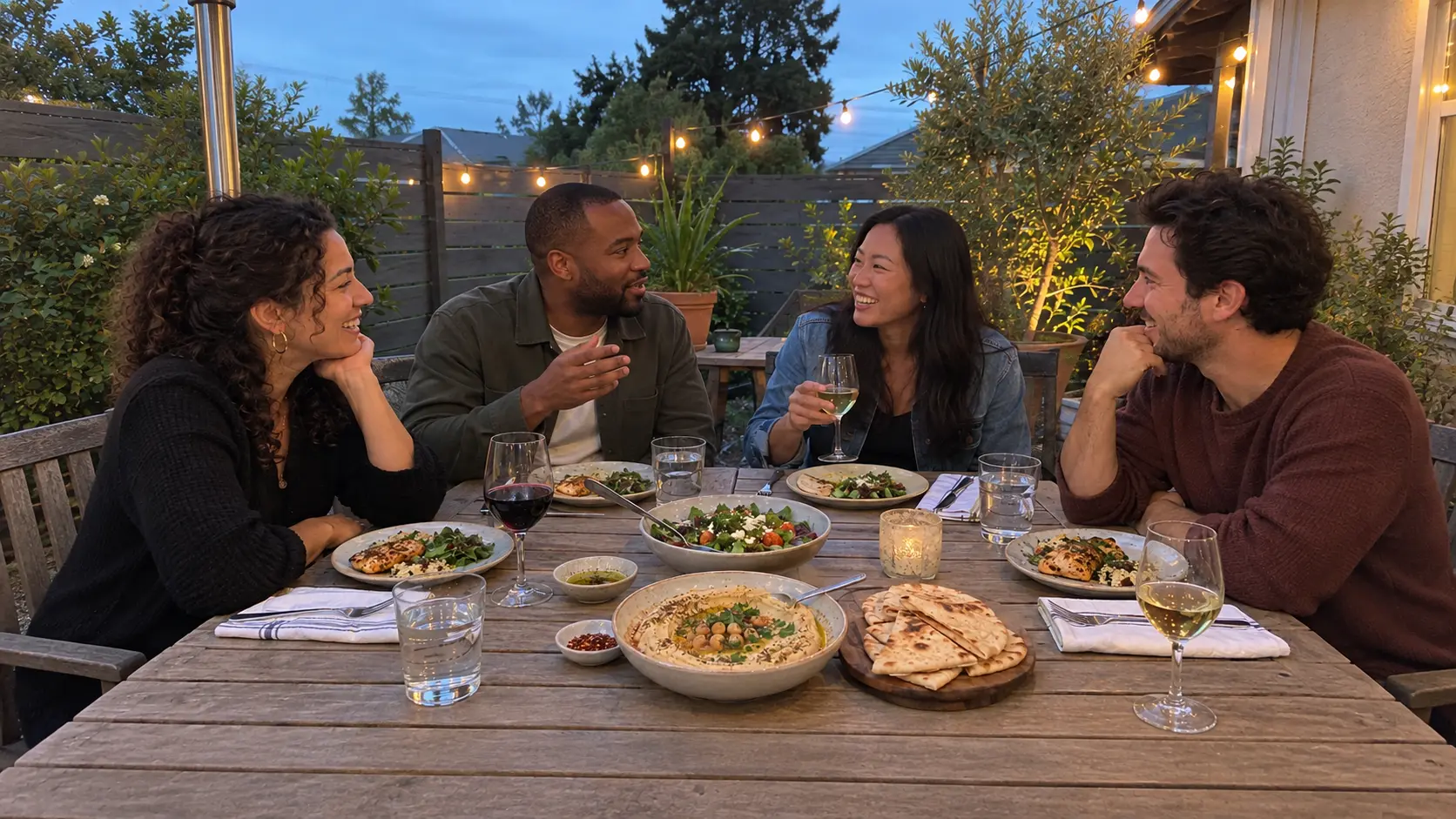
Part of the shift begins with the food itself. Shareable dishes remove some of the ceremony from dinner and give everyone a reason to lean into the middle of the table.
At Rara in Palo Alto, a rotating menu of globally inspired small plates and natural wines creates an intentionally convivial atmosphere. Instead of committing to one entrée, the table becomes a collection of flavors and discoveries.
The same social rhythm is built into Mediterranean dining at Elia in San Carlos. Mezze, seafood, lamb, and hummus already invite sharing, but the restaurant pushes the evening further with live music on weekdays and DJ sets on weekends. Dinner gradually changes gears without requiring anyone to change venues.
Music is part of the menu
Live music once felt like a special event reserved for concert halls or dedicated clubs. Now it is increasingly part of the neighborhood dining experience.
At A2 in San Mateo, the combination of wine bar, art gallery, live music, charcuterie, and cheese plates makes the space feel like a miniature cultural gathering. Guests can stop in for a glass of wine and discover that they have also arrived at a gallery opening or an evening of jazz.
Noelani’s Island Grill brings a different energy to San Carlos. Hawaiian-Asian food, tropical cocktails, and nightly live music create an atmosphere where dinner feels closer to a getaway. Poke, loco moco, and garlic chicken may bring people through the door, but the music encourages them to stay.
The important change is not simply that restaurants are booking performers. It is that music has become part of the hospitality. It changes the pace of the room, connects neighboring tables, and gives the night a shared soundtrack.
Patios became gathering places
Outdoor dining also helped change what a neighborhood restaurant could be. A patio can expand a meal into something looser and more communal—especially when it includes music, drinks, and room for families or groups to settle in.
Devil’s Canyon Brewing Company in San Carlos captures that spirit every Friday with a family-friendly beer garden, live music, and food trucks. There is no pressure to follow a formal dinner schedule. Guests can arrive when they like, choose what they want to eat, and let the evening unfold.
At Capelo’s Barbecue in Redwood City, the gathering centers on Southern barbecue smoked low and slow over oak. Mammoth rotisserie smokers, a beer garden, and live music give the experience the scale and energy of a backyard cookout—just without anyone having to tend the fire.
These spaces succeed because they accommodate different versions of a night out. One group might be meeting for dinner, another for a drink, and another simply because they heard the music. Together, they create the crowd.
Familiar places found new energy
The neighborhood party is not limited to new restaurants. Some of the best examples happen in places with deep local roots.
Alhambra Irish House occupies Redwood City’s historic 1896 Alhambra Theater. The family-owned pub combines seasonal Irish food with live music and a heated beer garden, connecting the building’s theatrical past with a lively new role as a community gathering place.
In Woodside, Pioneer Saloon offers another version of the same idea. Its stained-glass windows and historic character provide the setting, while live country and rock bands, Tuesday karaoke, burgers, and wings keep the mood informal. It is not a carefully staged “experience.” It is a place where regulars and newcomers can become part of the room.
The party reaches the coast
On the Coastside, the landscape contributes its own kind of energy.
Old Princeton Landing Public House and Grill in Half Moon Bay has been a local favorite since 2010. With live music, craft beer, fish tacos, poke, and clam chowder, it brings together the essential ingredients of a coastal gathering: casual food, local character, and a reason to stay after the plates are cleared.
That last detail may be the clearest sign of how dinner has changed. The meal is still important, but it is no longer the automatic end of the evening.
More than a reservation
The best neighborhood restaurants have always brought people together. What feels different now is how deliberately they are creating room for connection.
A shared plate starts a conversation. A patio lets several generations gather without formality. A local band turns separate tables into one audience. A karaoke microphone can make strangers feel like old friends—or at least give them something to talk about.
Dinner has not stopped being dinner. It has simply become the opening act.