

Where vegetables get the main-event treatment
October 20, 2026
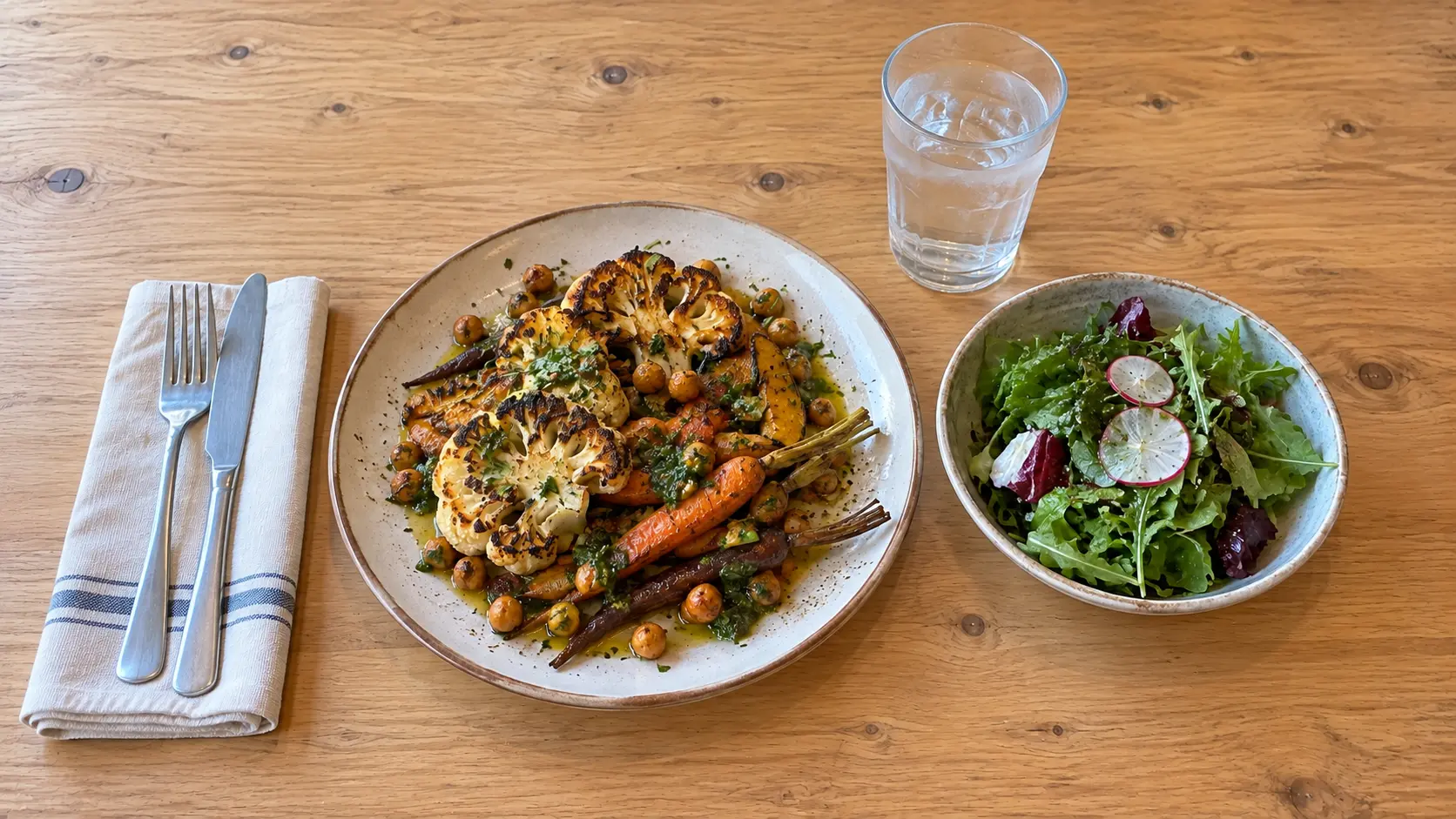
Vegetables no longer need to arrive beside the entrée to justify their place at dinner. Across the Peninsula, restaurants are treating plants as the foundation of the meal: roasting, charring, layering, fermenting, and seasoning them with the same attention traditionally reserved for meat or seafood.
Some of these restaurants are fully plant-based. Others work from a farm-to-table philosophy that lets seasonal produce determine the direction of the kitchen. Together, they make a strong case for ordering vegetables because they sound delicious—not because anyone is settling.
Begin with a fully plant-based table in Burlingame
Twelvemonth makes everything from scratch daily, including its breads, pastries, and desserts. The restaurant’s vegan and vegetarian focus extends across the full experience rather than being limited to a few designated menu items. Outdoor seating and a polished atmosphere helped it earn the Outside Eats Best of San Mateo 2026 award for Best Restaurant for Ambiance.
Next door, Twelvemonth Bar carries the idea into a more evening-oriented setting. Its fully plant-based offerings interpret global cuisine through a California lens, with cocktails and outdoor seating completing the experience.
The two spaces demonstrate an important point: vegetable-forward dining can support different moods. It can be a complete restaurant experience or a spontaneous round of drinks and plates.
Follow the ingredients to San Carlos
Johnston’s Saltbox makes seasonal dishes from scratch using ingredients from its rooftop garden. The menu also includes burgers and fried chicken, so the restaurant is not strictly vegetarian. That makes it useful for mixed groups—and provides a clear test of whether vegetable dishes can command attention beside familiar favorites.
Order according to the season rather than habit. When ingredients are grown close to the kitchen, the most interesting dish may be the one that changed recently.
Choose farm-to-table in Palo Alto
Local Union 271 is a family-owned American restaurant built around scratch-made food and locally sourced ingredients. Farm-to-table cooking works best when it is treated as a practical relationship rather than a slogan: local ingredients enter the kitchen, and the menu responds.
Nearby, Sprout Cafe takes a more casual approach with fresh salads, grain bowls, and seasonal ingredients. Its University Avenue location makes it a popular choice for the Stanford community and an easy stop when a vegetable-forward lunch needs to be quick without becoming forgettable.
For a more formal dinner, Wildseed offers plant-based fine dining with globally inspired, vegetable-forward dishes. The restaurant puts technique and presentation at the center of the experience, demonstrating that a meat-free meal can still carry the sense of occasion people expect from a polished dining room.
Look beyond vegetarian restaurants
Farm & Vine American Bistro in Burlingame is not exclusively plant-based, but its farm-to-table outlook and sustainably minded approach make it part of the conversation. The restaurant’s menu is shaped by a chef with decades of experience and works especially well for groups with different preferences.
In Pacifica, The Green Enchilada brings the idea into Mexican cooking. The restaurant has served made-from-scratch dishes with fresh, locally sourced, organic ingredients since 2008. Vegetables, chiles, herbs, beans, and sauces have always been central to Mexican cuisine; a produce-forward meal here does not need to imitate a steakhouse entrée to feel complete.
How to order a vegetable-forward meal
Start by ignoring the menu hierarchy. An item listed under sides or starters may be the most compelling dish on the page. Order several plates with different techniques—something raw, something roasted, something crisp, and something sauced—then share them across the table.
Ask what is seasonal. Kitchens working with local produce may change dishes as ingredients come and go. Check current menus and hours before visiting, especially when a particular vegetable or preparation is the reason for the trip.
The best vegetable cooking does not ask diners to admire its restraint. It delivers contrast, abundance, and flavor. The plate may begin with plants, but it should end with everyone reaching for the last bite.